Regenerative Medicine
PRP for Sports Injury
Supporting your body's own repair response, where it's needed most.
Supporting your body's own repair response, where it's needed most.
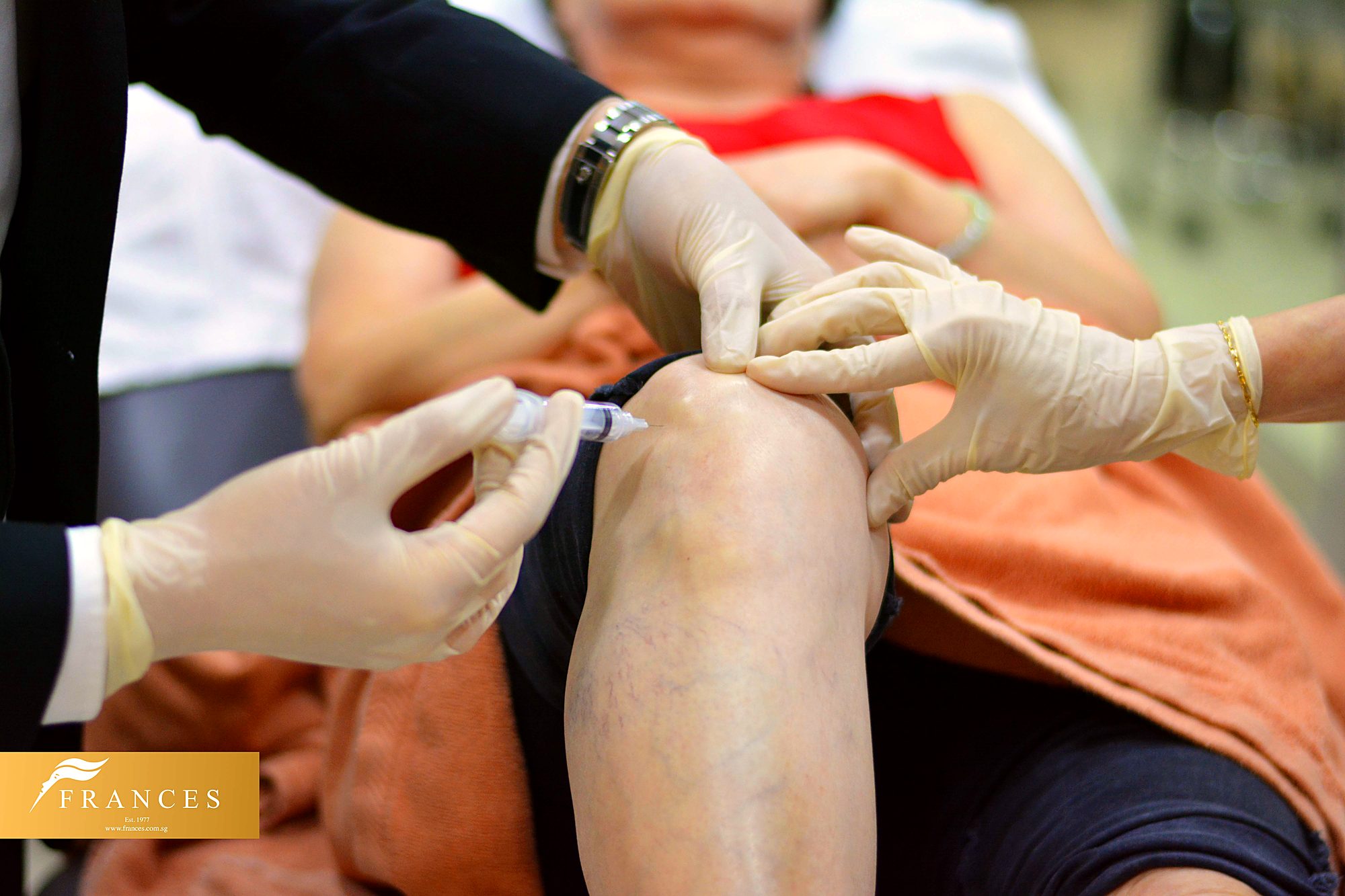
PRP, or platelet-rich plasma, is prepared from a small sample of your own blood and injected into an injured tendon, ligament or joint area, with the aim of supporting the body's natural healing and repair response. It is commonly considered for conditions such as tennis elbow, tendinopathies, and persistent soft-tissue injuries that haven't fully settled with standard care.
Dr Gerald Tan assesses each case through a detailed history and physical examination, and sometimes imaging, before recommending whether PRP is an appropriate part of your recovery plan.
Dr Gerald Tan takes a detailed history and examines the injured area, sometimes supported by imaging, to understand the nature and extent of the injury before recommending PRP. Where appropriate, a blood sample is drawn and processed to concentrate the platelet-rich plasma, which is then injected directly into the affected tendon, ligament or joint area under controlled, sterile conditions to support the body's own healing response.
Persistent pain and tenderness around the outer elbow from repetitive strain.
Ongoing tendon irritation or degeneration that hasn't settled with rest alone.
Lingering strains or sprains affecting activity or training.
Patients who want to support natural healing before considering more invasive options.
Mild soreness at the injection site is possible for a few days and typically settles with simple care.
The body's repair response typically builds gradually over this period, though individual recovery varies by injury and severity.
Dr Tan will guide activity and rehabilitation alongside PRP, and may recommend a review or repeat session depending on your response.
Book a consultation with Dr Gerald Tan to find out if PRP for sports injury is right for you.
Book a ConsultationDisclaimer: Individual results may vary based on the nature and severity of the injury, and on individual healing response. All treatments are doctor-administered. Suitability is assessed at consultation. This page is for general education and is not a substitute for medical advice.